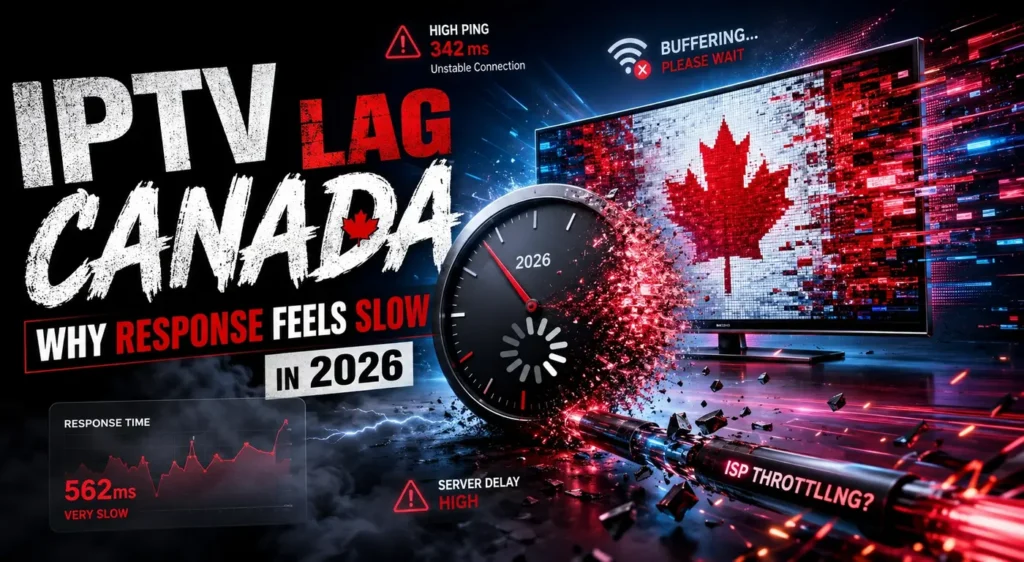
IPTV Lag Canada: Why Response Feels Slow in 2026
When IPTV lag Canada becomes a problem, the experience feels slow, heavy, or delayed. The app may open, but it does not respond quickly. The remote may feel late. Channels may take longer to switch. Menus may move slowly. Sometimes the stream plays, but the response feels behind what the user expects.
This type of issue is different from buffering, freezing, or not loading. Buffering means the stream pauses to load. Freezing means the image stops. Not loading means the content does not appear correctly. Lag usually means the app, device, menu, or stream response feels slow.
In 2026, Canadian users watch IPTV on Smart TVs, Firestick, Android TV, phones, tablets, laptops, and TV boxes. Each device can show lag in a different way. This guide explains what IPTV lag Canada means, why it happens, and what users should check before changing settings or contacting support.
What IPTV Lag Means for Canadian Users
IPTV lag usually means there is a delay between what the user does and how the app or stream responds. For example, you press a button on the remote, but the menu moves one or two seconds later. You switch a channel, but it takes too long to open. You scroll through categories, but the app feels slow.
For Canadian users, IPTV lag Canada can happen because of device performance, app behavior, connection delay, storage problems, or home network pressure. It does not always mean the IPTV service is the only problem.
Lag can also feel different depending on the device. A Smart TV app may feel slow because the TV system is old. A Firestick may lag because too many apps are running. An Android TV box may respond slowly because storage is full. A phone or tablet may lag if the app has been open for too long.
The key is to understand where the delay appears. Is the remote slow? Is the app menu slow? Is channel switching slow? Is the stream itself delayed? Each case can point to a different cause.
Lag Is Different From Buffering, Freezing, and Not Loading
Many IPTV problems look similar, but they are not the same. Understanding the difference helps users avoid the wrong fix.
Buffering happens when the stream pauses to load more data. You may see a loading circle, or the video may stop and then continue. If this is your main issue, this guide about IPTV buffering Canada explains loading and bandwidth problems more clearly.
Freezing happens when the picture stops or the app becomes stuck. The stream may stop on one frame and not continue normally. If this happens often, this guide about IPTV keeps freezing Canada explains stream stops and frozen playback.
Not loading happens when the app opens but content, lists, or channels do not appear. If that is your issue, this guide about
IPTV not loading Canada explains what to check before contacting support.
IPTV lag Canada is different because the content may appear and the stream may work, but the response feels slow. The app may still function, but it does not feel smooth.
Why IPTV Menus and Apps Feel Slow
IPTV menus can feel slow for many reasons. One common reason is that the device is not powerful enough to handle the app smoothly. Some Smart TVs and older TV boxes have limited memory and slower processors, which can make menus react slowly.
Another reason is app pressure. If the IPTV app has been open for a long time, it may become heavy. If the app stores too much temporary data, it may respond slower than usual. Restarting the app can sometimes improve response.
Background apps can also affect performance. On Firestick, Android TV, phones, and tablets, other apps may continue running in the background. This can use memory and make the IPTV app feel slower.
For IPTV lag Canada, users should look at app response separately from internet speed. A slow menu does not always mean the connection is bad. Sometimes the device or app needs attention.
If the app menu feels slow but other apps also feel slow, the device may be overloaded. If only the IPTV app feels slow, the app itself may need a restart, update, or support check.
Device Performance and Storage Problems
Device performance is one of the biggest causes of IPTV lag. A weak or overloaded device can make the whole experience feel slow.
Smart TVs can become slow over time, especially if they are older or have limited storage. Firestick devices can also lag when storage is almost full or when too many apps are installed. Android TV boxes may slow down if they are low-quality, outdated, or overloaded with apps.
For IPTV lag Canada, storage matters because apps need space to run properly. If the device is full, the app may struggle to open menus, load categories, or switch channels quickly.
A simple way to improve performance is to remove unused apps. Restart the device before long viewing sessions. Close apps running in the background. Avoid installing many unnecessary apps on the same device.
If your IPTV app works faster after restarting the device, the issue may be device pressure. If the lag returns quickly, the device may need more cleaning, more storage space, or a lighter setup.
Connection Delay and Network Response
Connection delay can also make IPTV feel slow. This is not always about download speed. Sometimes the issue is how quickly data travels between your device, the network, and the service.
Connection delay is often linked to latency basics, which means the time it takes for data to travel between your device, the network, and the service.
For IPTV lag Canada, latency can affect how fast the app responds, how quickly channels open, and how smooth the experience feels. Even if your internet speed is good, high delay can still make the app feel slow.
WiFi can also add delay, especially if the signal is weak or unstable. A device far from the router may receive a weaker signal, which can make the app respond slower or channels take longer to open.
If possible, test the device closer to the router. You can also restart the router and check whether the app response improves. If your device supports Ethernet, testing a wired connection can help you see whether WiFi delay is part of the problem.
Slow Channel Switching: What It Can Mean
Slow channel switching is a common sign of IPTV lag. The user selects a channel, but it takes too long to open. Sometimes the screen stays black for a moment. Sometimes the app looks like it is thinking before the stream starts.
This can happen for different reasons. The app may be slow. The device may be overloaded. The connection may be delayed. The service may also take time to respond, especially during busy hours.
For IPTV lag Canada, slow channel switching should be checked carefully. If every channel takes a long time to open, the issue may be general app or device performance. If only some channels are slow, the issue may be related to those specific streams.
It also helps to compare channel switching on another device. If the same service switches faster on another screen, your main device may be the weak point. If it is slow on all devices, the issue may be connection or service response.
Do not change too many settings at once. Test one thing at a time so you can understand what improves the response.
Simple Checks to Reduce IPTV Lag
Reducing IPTV lag starts with simple steps. Many users try complicated changes too quickly, but basic checks can help a lot.
First, restart the IPTV app. Close it fully, then open it again. This can clear temporary app pressure.
Second, restart the device. Smart TVs, Firestick, Android TV, phones, and tablets can all become slow after long use.
Third, check storage. If your device is almost full, remove apps you do not use. Keep the device clean and simple.
Fourth, restart the router. If the network response is slow, restarting the router may help refresh the connection.
Fifth, reduce connected devices. If many devices are active at the same time, the home network may feel slower.
For IPTV lag Canada, these simple checks can help:
- Restart the IPTV app.
- Restart the streaming device.
- Remove unused apps.
- Close background apps.
- Restart the router.
- Test closer to the WiFi router.
- Try Ethernet if possible.
- Test another device.
- Check whether other apps feel slow too.
These steps help users understand whether the problem comes from the device, app, connection, or service.
When Lag Becomes a Bigger Stability Issue
Occasional lag can happen with many apps and devices. But if the app always feels slow, channel switching always takes too long, or the remote response is constantly delayed, the issue becomes a bigger stability problem.
A stability problem means the setup is not smooth enough for normal viewing. The cause may be device limits, app behavior, weak WiFi, connection delay, or home network pressure.
For a broader overview, this guide about IPTV stability Canada explains how lag, buffering, freezing, internet speed, and device performance work together.
For Canadian users looking for a home-focused IPTV starting point, iptv maple can help you explore an IPTV option built for Canadian viewing needs.
If IPTV lag Canada continues after basic checks, contact support with clear details. Explain the device, app, connection type, when the lag happens, and what steps you already tried.
Clear information helps support understand whether the issue is device-related, app-related, connection-related, or service-related.
Final Thoughts
IPTV lag Canada usually means the app, menu, channel switching, remote response, or stream response feels slow. It is different from buffering, freezing, and not loading because the service may still work, but the experience feels delayed or heavy.
Start with the device. Restart it, close background apps, remove unused apps, and check storage. Then check the connection. Restart the router, test WiFi strength, and try Ethernet if possible.
If the lag happens only on one device, the device or app may be the cause. If it happens on all devices, the connection or service response may need more attention.
In 2026, Canadian users can reduce many IPTV lag problems by keeping the setup simple, testing one change at a time, and understanding the difference between slow response, buffering, freezing, and loading issues.
FAQ
IPTV lag Canada means the IPTV app, menus, remote response, channel switching, or stream response feels slow or delayed for Canadian users.
No. Buffering means the video pauses to load. Lag means the app or response feels slow, even if the content is visible or the stream is working.
IPTV menus can be slow because of device performance, low storage, background apps, app cache, weak connection response, or an overloaded streaming device.
Slow channel switching can happen because of app response, device limits, connection delay, or service response time. Testing another device can help identify the cause.
Yes. Weak or unstable WiFi can add delay and make the app feel slower, especially if the device is far from the router.