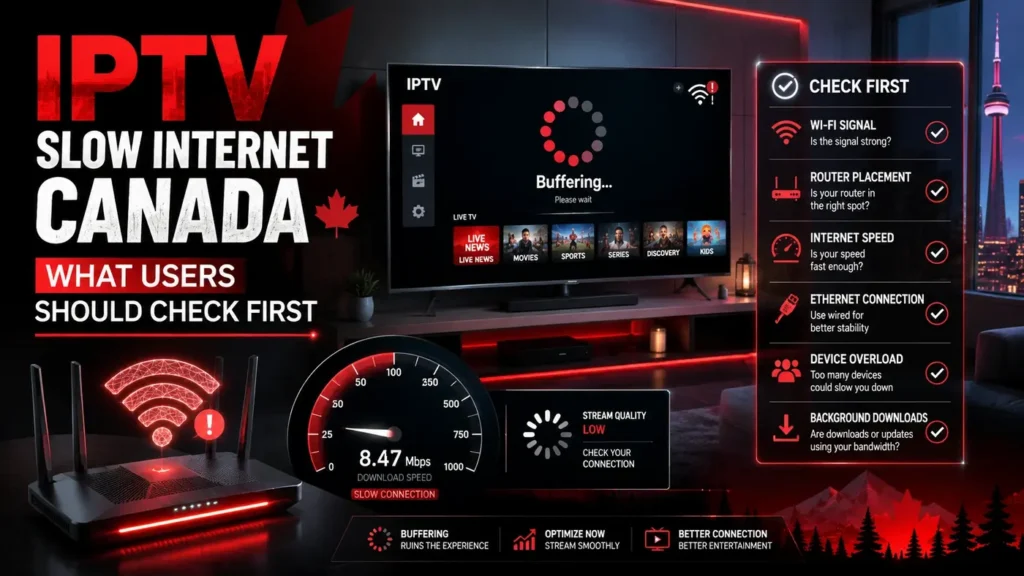
IPTV Slow Internet Canada: What Users Should Check First
When IPTV slow internet Canada becomes a problem, the streaming experience can feel weak, unstable, or frustrating. The app may open normally, but channels may take longer to start. The picture may reduce quality. The stream may buffer, freeze, or feel slow during normal viewing.
Many users think the IPTV service is always the reason, but slow internet can come from the home setup too. WiFi weakness, too many connected devices, router distance, peak-hour pressure, or low real speed on the main device can all affect IPTV performance.
This guide explains what IPTV slow internet Canada usually means, how to check the real speed reaching your device, and what users should test before blaming the service or contacting support.
What IPTV Slow Internet Canada Usually Means
IPTV slow internet Canada usually means the connection reaching your IPTV device is not strong or stable enough for smooth streaming. The internet may work for simple browsing, but IPTV needs a more consistent connection because video streaming uses continuous data.
Slow internet can appear in different ways. The stream may take longer to open. The picture may become blurry. The app may feel slow. Channels may load after a delay. Sometimes playback starts normally, then becomes unstable after a few minutes.
This does not always mean your internet plan is bad. Sometimes the plan is good, but the real speed reaching the device is weaker. This can happen when the TV or streaming device is far from the router, connected through weak WiFi, or sharing the network with many other devices.
For IPTV, consistency matters. A connection that works one minute and drops the next can create problems even if your speed looks good sometimes.
Slow Internet Is Not Always an IPTV Service Problem
When IPTV feels slow, many users immediately blame the IPTV service. Sometimes the service can be part of the problem, but slow internet should be checked first.
If other apps are also slow, the issue is probably not only IPTV. If YouTube, browsers, app stores, or other streaming apps are slow too, your home connection may be weak or unstable.
If IPTV works better at certain times of the day, the issue may also be related to network pressure. For example, the service may feel fine during the afternoon but slow during the evening when more devices are connected.
For IPTV slow internet Canada, the first goal is to understand whether the problem is only inside the IPTV app or across the full device and connection.
A good test is simple: open another app on the same device. If that app is also slow, check your internet, WiFi, and device before changing IPTV settings.
Check the Real Speed Reaching Your Device
One of the biggest mistakes users make is checking internet speed near the router only. The router may receive good speed, but your Smart TV, Firestick, Android TV box, or tablet may receive much less.
For IPTV slow internet Canada, real device speed is more important than the number in your internet plan. IPTV depends on what reaches the device you actually use for streaming.
You can also use a simple internet speed check to see whether your connection feels slower than expected on the device or network you use for IPTV.
Try testing from the same room where you watch IPTV. If you use IPTV on the living room TV, test near that TV. If the result is much lower than expected, WiFi distance or home network pressure may be part of the issue.
For a deeper explanation of this topic, this guide about internet speed for IPTV Canada explains how real device speed affects IPTV performance.
WiFi Weakness Can Make IPTV Feel Slow
WiFi is convenient, but it is also one of the most common reasons IPTV feels slow. A device can show that it is connected to WiFi, but the signal may still be weak or unstable.
Walls, distance, furniture, router position, and interference can all reduce WiFi strength. This can make IPTV load slowly, buffer, or reduce picture quality.
For IPTV slow internet Canada, WiFi should be checked carefully. If your TV or streaming device is far from the router, the speed reaching that device may be much lower than the speed available near the router.
A few simple changes can help. Move the router to a more open place. Avoid hiding it behind furniture. Keep the IPTV device closer if possible. Restart the router if the connection feels weak.
If your main device supports Ethernet, testing a wired connection can also help. This guide about IPTV WiFi vs Ethernet Canada explains when WiFi is enough and when Ethernet may be better for stability.
Too Many Devices Can Slow Down Streaming
A home internet connection is shared by all connected devices. Phones, tablets, laptops, Smart TVs, gaming consoles, and smart home devices can all use bandwidth.
If many devices are active at the same time, IPTV may not get enough stable connection. This can make the stream feel slow even if your internet plan looks good.
For example, someone may be gaming online, another person may be watching videos, and a laptop may be downloading updates. At the same time, your IPTV device is trying to stream smoothly. This can create pressure on the connection.
When IPTV slow internet Canada happens, try reducing connected activity. Pause downloads, close unused apps, stop extra streams, and test IPTV again.
If IPTV becomes smoother when fewer devices are active, the issue may be home bandwidth pressure. In that case, the service may not be the only problem.
Why Slow Internet Feels Worse During Busy Hours
Many users notice that IPTV feels worse at night. This is common because evening hours are usually busier. More people are home, more devices are connected, and more streaming happens at the same time.
This can create pressure inside your home network. It can also make your internet feel less consistent during peak hours.
For IPTV slow internet Canada, timing matters. If IPTV works well during the day but becomes slow in the evening, the issue may be connected to peak-hour usage.
Try testing IPTV at different times. If the problem appears mostly at night, avoid heavy downloads during viewing, reduce connected devices, and restart the router before long sessions.
Do not judge the full service from one busy moment only. Check patterns. If slow internet happens every night, your home connection or local network pressure may need attention.
Simple Checks Before Blaming the Service
Before blaming the IPTV service, users can check a few simple things. These steps can help identify whether the problem comes from the internet, the device, or the app.
Start by restarting your router. Then restart your IPTV device. After that, open the app again and test the stream.
Check whether other apps are slow. If everything is slow, the issue is probably your connection or device. If only IPTV is slow, then the app or service may need more attention.
For IPTV slow internet Canada, use this quick checklist:
- Restart the router.
- Restart the IPTV device.
- Test another app on the same device.
- Test IPTV at a different time of day.
- Move closer to the WiFi router.
- Pause downloads and heavy streaming.
- Reduce connected devices.
- Try Ethernet if possible.
- Test another device.
If these steps improve the experience, the problem was likely connected to the home setup.
Add Your Heading Text Here
Slow internet becomes a bigger stability issue when it happens often. If IPTV is slow every day, loads slowly on the main device, or becomes weak during normal viewing, the setup needs more attention.
A stable IPTV experience depends on more than subscription access. Internet speed, WiFi strength, device performance, and home network pressure all matter.
For a broader overview, this guide about IPTV stability Canada explains how slow internet, buffering, freezing, lag, WiFi, and device performance work together.
If your slow internet appears mainly as loading circles during playback, this guide about IPTV buffering Canada may help you understand the difference between slow connection and buffering.
For Canadian users looking for a home-focused IPTV starting point, iptv canada can help you explore an IPTV option built for Canadian viewing needs.
Final Thoughts
IPTV slow internet Canada usually means the connection reaching your IPTV device is weak, unstable, crowded, or slower than expected. It does not always mean the IPTV service is the only problem.
Start by checking the real speed near your device. Then check WiFi strength, connected devices, router position, and peak-hour pressure. Test other apps to see whether the issue affects the whole device or only IPTV.
If your internet is slow across multiple apps, fix the home connection first. If everything else works well and IPTV still feels slow, then support may need to check the service or access details.
In 2026, Canadian users can improve IPTV performance by keeping the home connection stable, reducing network pressure, and testing the device they actually use for streaming.
FAQ
IPTV slow internet Canada means the connection reaching your IPTV device may be too weak, unstable, or crowded for smooth streaming.
No. Slow IPTV can come from weak WiFi, too many devices, router distance, peak-hour pressure, or low real speed on the device.
Test your speed near the device you use for IPTV, not only near the router. Also check whether other apps are slow on the same device.
Yes. Weak WiFi can reduce the real speed reaching your IPTV device, especially if the device is far from the router or blocked by walls.
IPTV can feel slower at night because more devices are connected, more people are streaming, and the home network may be under more pressure.